
2019/03/23
DNA Computer executes six-bit algorithms
"A general-purpose, reprogrammable molecular computer has been constructed from DNA by a team of researchers in the US and Ireland. The system can execute different algorithms ranging from copying and sorting processes, generating random walks and executing cellular automata. It works by the self-assembly of DNA strands or ‘tiles’ into helices that form tubular structures by complementary base pairing. The emerging patterns on the tubes encode the output from the algorithm, and can be read out mechanically using an atomic force microscope (AFM) to inspect the molecular structures." News Article @ Chemical World and Full research paper @ Nature. (Thanks to Thiago Carvalho for link)
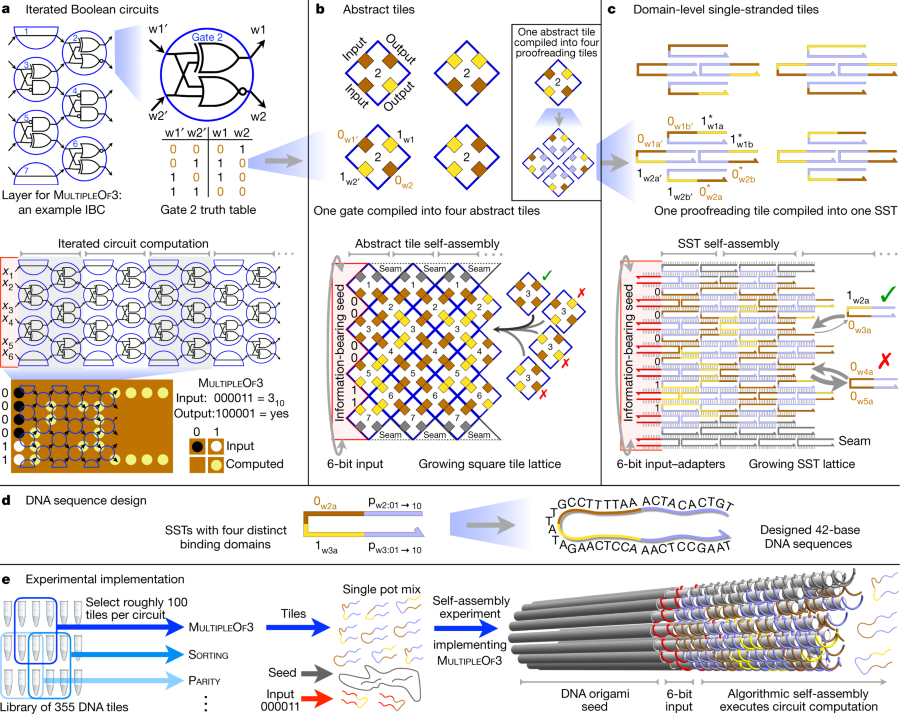
Labels: #DNA, #DNAComputing, #MolecularComputers


2019/02/22
genetic Memory can have More symbols
"The DNA of life on Earth naturally stores its information in just four key chemicals — guanine, cytosine, adenine and thymine, commonly referred to as G, C, A and T, respectively. Now scientists have doubled this number of life’s building blocks, creating for the first time a synthetic, eight-letter genetic language that seems to store and transcribe information just like natural DNA. Synthetic DNA seems to behave like the natural variety, suggesting that chemicals beyond nature’s four familiar bases could support life on Earth." Full news article @ Nature News, scientific article @ Science.

2015/12/01
DNA memory: What’s Old Is New Again
"Revolutionary new methods for extracting, purifying, and sequencing ever-more-ancient DNA have opened an unprecedented window into the history of life on Earth. In just a few decades, the study of ancient DNA has gone from a scientific curiosity to an extremely powerful method for reconstructing past biological phenomena." News article @ The Scientist Magazine®

Labels: #archeology, #DNA, #evolution

