
2026/11/05
Prediction misses the point of von Foerster’s “doomsday” equation
In 1960, Heinz von Foerster and colleagues published a wonderful paper proposing a “doomsday equation” of human population growth. Based on a power-law model, it predicted a singularity for Friday, 13 November, AD 2026. I was delighted that Science decided to highlight this paper as we approach that date, and obviously are nowhere near a singularity for the human population.
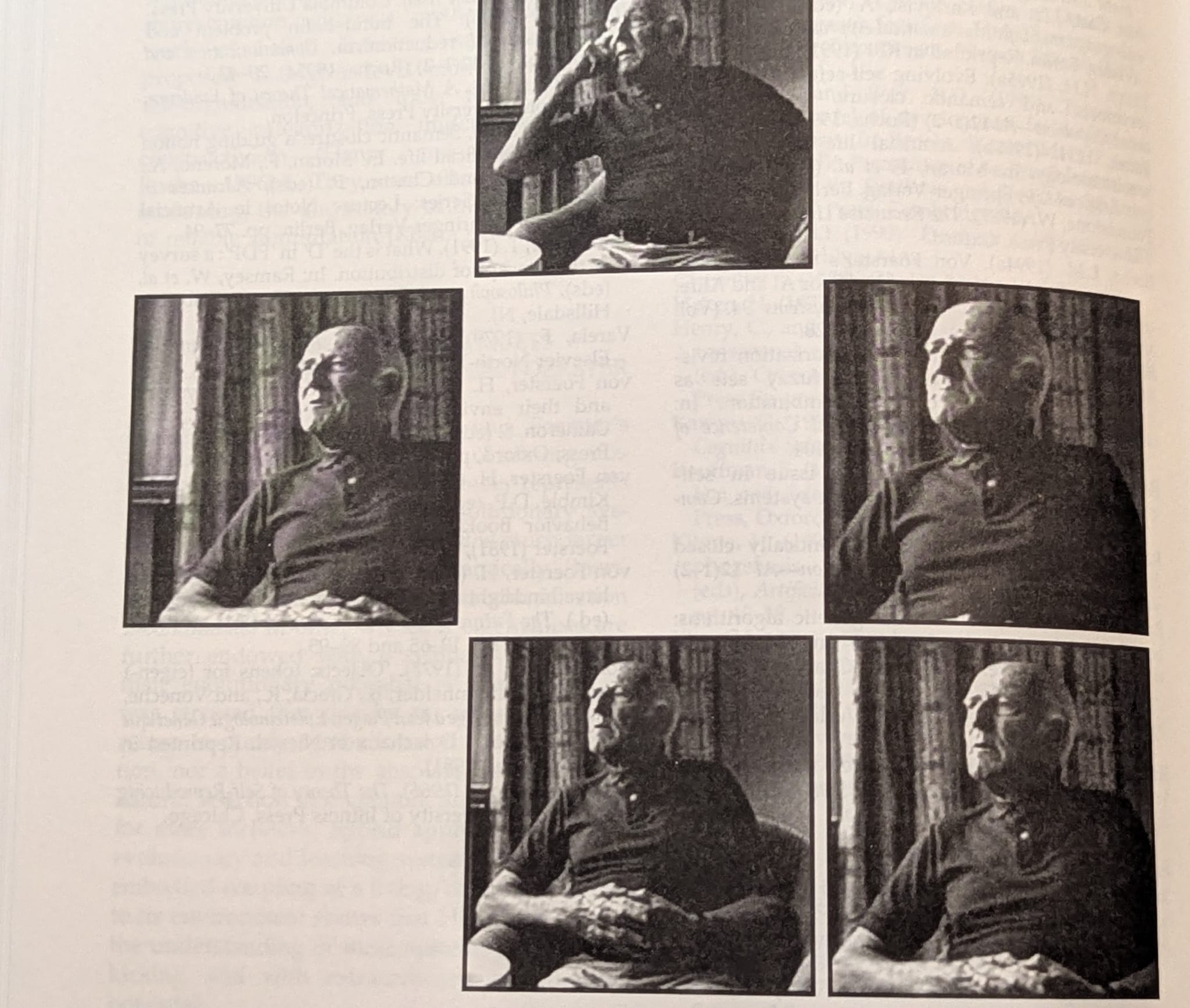
Birchenall’s [2026] reflection just published, recovers the modeling innovation of von Foerster’s oft forgotten paper, together with its prediction successes and ultimate failure. However, it misses the tongue-in-cheek nature of that 1960 paper by the brilliant cybernetician (he was co-editor of the transactions of the original Macy Foundation Cybernetics meetings). It is clear from its discussion section that von Foerster did not believe the “doomsday” would be upon us in 2026. Rather, he suggests that social, biological, or ecological limits would develop a cybernetic “people-stat” to keep population under bounds. Indeed, given his interest in “self-organizing systems” (he participated in a symposium on this topic in 1959 in Chicago and organized another one at the University of Illinois in 1962), his larger point was that in the presence of true complex systems, induction from past data will fail to predict the future due to adaptive and self-regulating mechanisms---a cybernetic argument dear to Von Foerster’s second-order cybernetics [Rocha, 1996].
Let me add that I had the pleasure of discussing this paper with him to understand what the point of his power-law model of hyperbolic growth was. His goal was a tongue-in-cheek way of both emphasizing the hopelessness of a stationary model and that humanity should do something about population growth rather than wait for planetary finite resources to impose a “people-stat”.
On a even more personal note, Heinz von Foerster was a very supportive influence in my early career, via generous time-consuming conversations, and by writing letters for my admission to graduate school and to obtain a scholarship for my PhD.
Birchenall’s [2026] reflection just published, recovers the modeling innovation of von Foerster’s oft forgotten paper, together with its prediction successes and ultimate failure. However, it misses the tongue-in-cheek nature of that 1960 paper by the brilliant cybernetician (he was co-editor of the transactions of the original Macy Foundation Cybernetics meetings). It is clear from its discussion section that von Foerster did not believe the “doomsday” would be upon us in 2026. Rather, he suggests that social, biological, or ecological limits would develop a cybernetic “people-stat” to keep population under bounds. Indeed, given his interest in “self-organizing systems” (he participated in a symposium on this topic in 1959 in Chicago and organized another one at the University of Illinois in 1962), his larger point was that in the presence of true complex systems, induction from past data will fail to predict the future due to adaptive and self-regulating mechanisms---a cybernetic argument dear to Von Foerster’s second-order cybernetics [Rocha, 1996].
Let me add that I had the pleasure of discussing this paper with him to understand what the point of his power-law model of hyperbolic growth was. His goal was a tongue-in-cheek way of both emphasizing the hopelessness of a stationary model and that humanity should do something about population growth rather than wait for planetary finite resources to impose a “people-stat”.
On a even more personal note, Heinz von Foerster was a very supportive influence in my early career, via generous time-consuming conversations, and by writing letters for my admission to graduate school and to obtain a scholarship for my PhD.
Labels: #ComplexSystems, #Cybernetics, #Modeling


2026/07/10
Heinz von Foerster
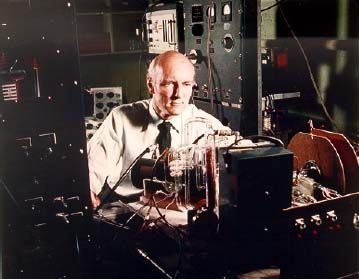
Appendix on Heinz Von Foerster from Juan David Campolargo's book The Jailbroken Guide to the University.
Labels: #Cybernetics, #Second-Order Cybernetics
2024/04/20
What Would the Father of Cybernetics Think About A.I. Today?
Norbert Wiener's legacy by Seth Lloyd. I reread "Human Use of Human Beings" last year and agree with most, though Wiener was correct about authoritarianism: Whether bottom-up or top-down, we are controlled and not as free as we could given what cybernetics gave us. Still, true that he would be happy that we are still alive!

Labels: #AI, #Cybernetics, #Wiener
2018/08/18
Optical Neural Nets Reborn
Lin et al "have created a 3D-printed artificial neural network that uses light photons to rapidly process information." This very cool device reminds me of Weston and Von Foerster's Numa-Rete device from the 1960s at the BCL in Urbana (which Von Foerster told me was a favorite of John Von Neumann because it could even count doughnut-shape objects without error). News article @TheScientist and paper in Science.

Labels: #AI, #AnlogueComputing, #Cybernetics, #DeepLearning, #NeoCybernetics, #NeuralNetworks
2017/01/03
The Cybernetic Humanities
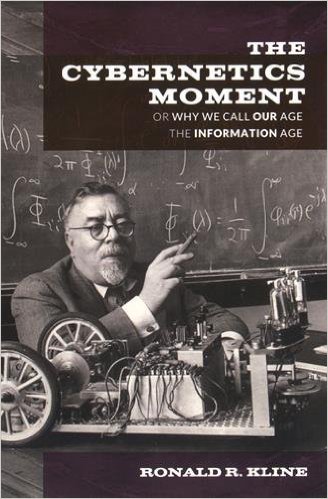
'For cybernetics, the digital brain completed the picture. Animals were machines, communication was control, and information processing was the principle, not just an element, of the new science. Wiener would not shy away from the philosophical consequences, claiming that “information is information, not energy or matter. No materialism which does not admit this can survive at the present day.”' Full review @ The Cybernetic Humanities - Los Angeles Review of Books
Labels: #Cybernetics, #information, #Interdisciplinarity
2015/10/08
Cybernetics and its offspring
Some n-gram analysis:
Some fun links to think about Information Theory and Cyberentics:
Entropy Applet
Letter frequency in English
Word and Letter Frequency in English
Entropy of English
Text Mechanic - Text Manipulation Tools
1952 – “Theseus” Maze-Solving Mouse @ cyberneticzoo.com
Entropy Applet
Letter frequency in English
Word and Letter Frequency in English
Entropy of English
Text Mechanic - Text Manipulation Tools
1952 – “Theseus” Maze-Solving Mouse @ cyberneticzoo.com
Labels: #Cybernetics, #Informatics
2015/08/19
Machine intelligence is Cybernetics again
Special insight section on Machine Intelligence shows that strengths of field are now strongly based on principles developed in Cybernetics era, but unleashed with the power of modern Informatics. See reviews on Deep learning, Evolutionary Computation, Reinforcement Learning, etc. McCulloch, Shannon, Von Neumann, Wiener and Turing would be proud. Special issue @ Nature

Labels: #AI, #Cybernetics, #Informatics, #MachineIntelligence
